
Geese's Getting Killed World Tour
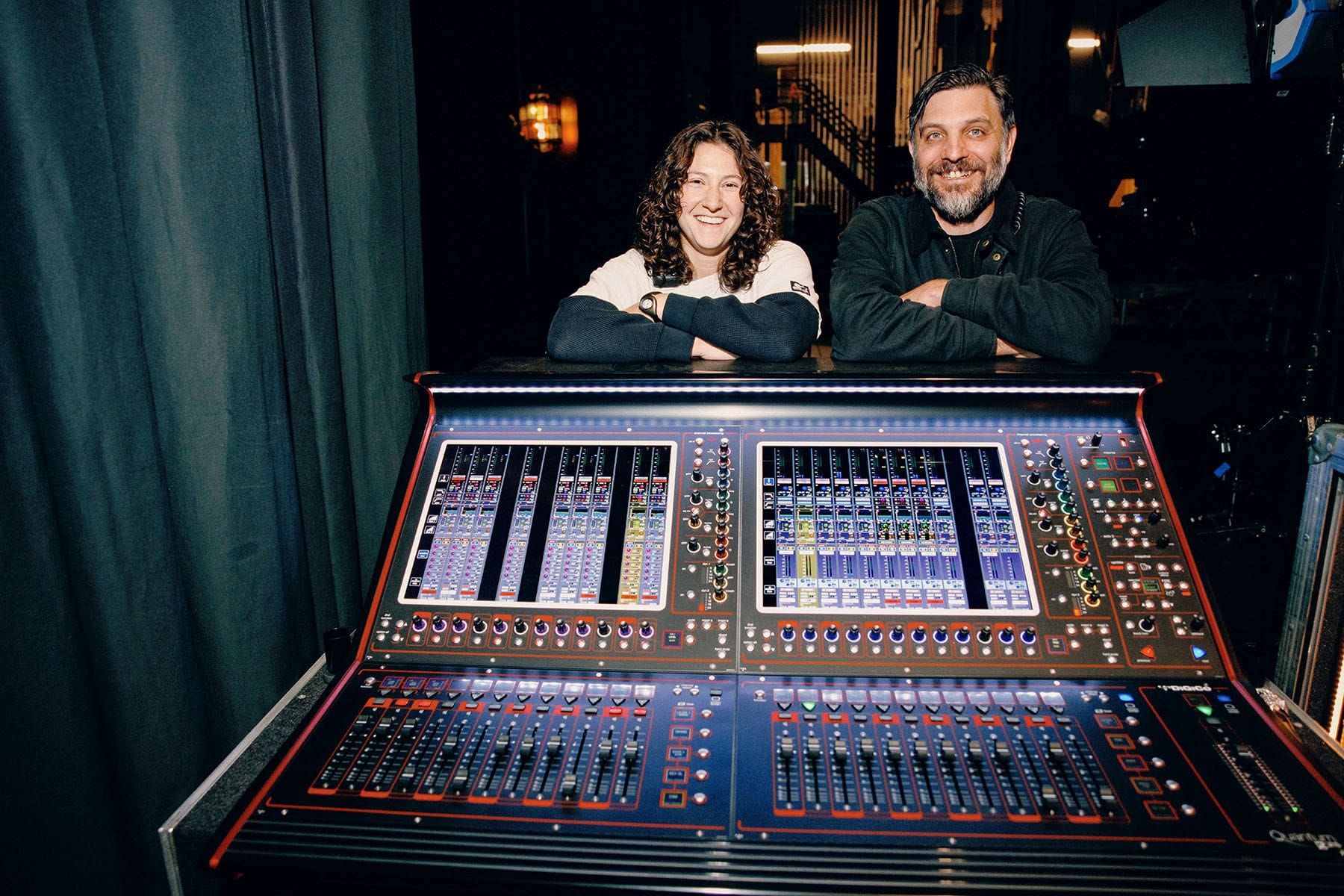
Geese, who have just received five nominations for the 2027 Grammy Awards following a breakout year supported by their album Getting Killed, were still in high school in New York City when they formed in 2016, and the current lineup of frontman Cameron Winter, guitarist Emily Green, bassist Dominic DiGesu and drummer Max Bassin is little changed since then. They populate the band’s Getting Killed World Tour, their third headlining concert tour, in support of their fourth studio album, that set off a year ago in Vermont and will end 13 months later in Washington, D.C.
Also on that tour are a pair of DiGiCo Quantum225 DS Pulse consoles for FOH and monitors, as well as a pair of SD-Racks, all supplied by leading Nashville-based touring audio provider Worley Sound. The desks are operated, respectively, by Ross Harris and Talia Krause, both of whom are loving the experience. “I feel like you can do everything you need to do on this console,” says Krause, who with Harris joined the band for this segment of the tour in May and chose the consoles, which are linked via an analog split. “I’m very familiar with DiGiCos,” she says. “I also mix quite a bit of broadcast award show gigs, and DiGiCo is the only console I use for those performances. It’s truly the best choice for that application.”
Specifically, Krause likes the fact that the dual-screen (DS) option has made her workflow much easier at monitors. “The dual screen has honestly been a game-changer because it gives you a full overview of your session, yet keeps the small footprint. We’ve had a couple of fly dates on this run where I had to use a standard Quantum225, and I appreciate the differences of the Pulse model with two screens. The DS version feels like a true extension of my workspace. Instead of having to spill faders to the main screen just to patch, tweak EQ, or adjust compression, I can handle all of that on the DS, which leaves my main screen free for viewing auxes or snapshots. My goal, especially during the show, is to keep my head up and focus on the band, rather than being buried in the console, and this setup lets me do exactly that.”
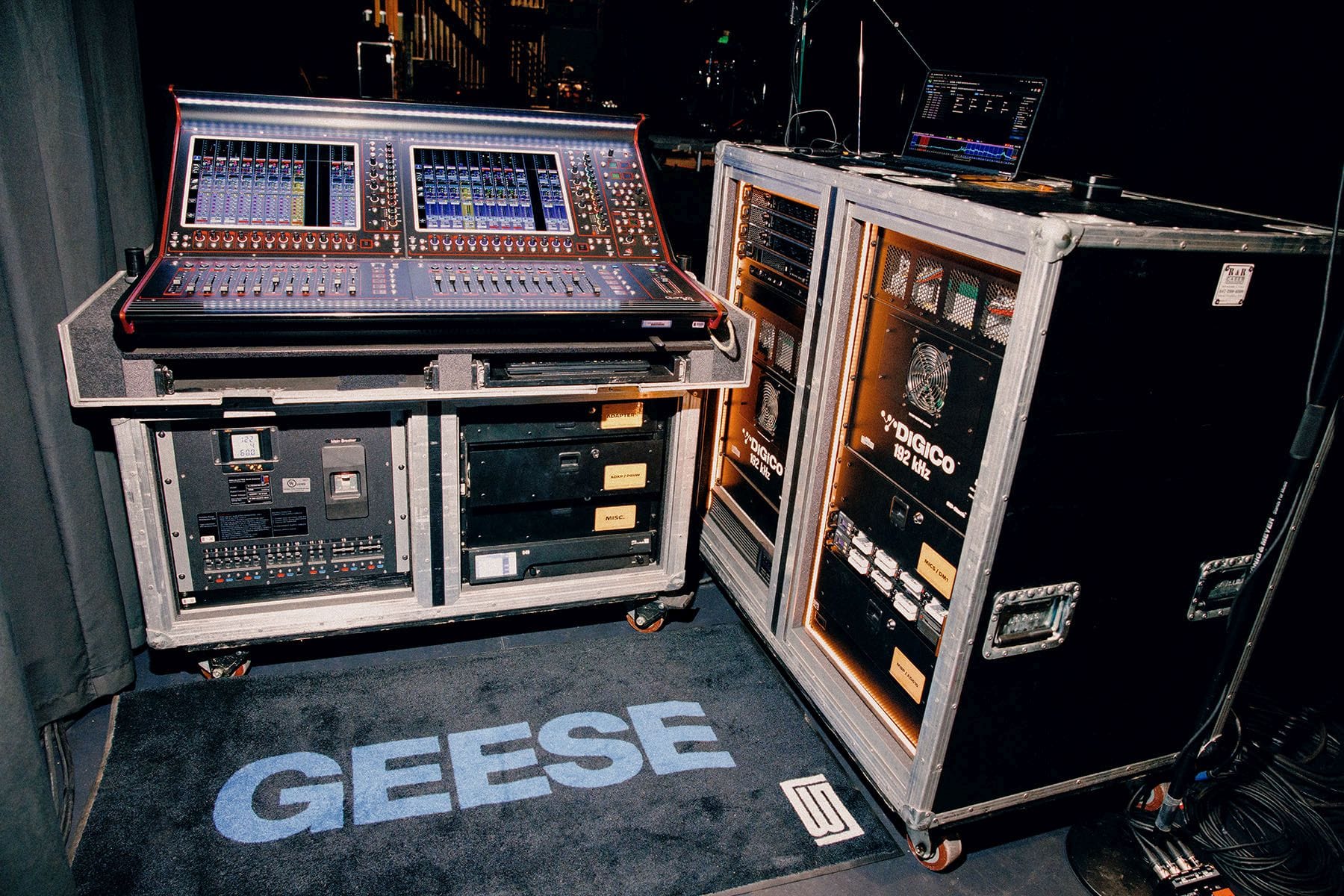
When it comes to monitors, Krause says “the simpler, the better,” and that includes keeping all of the processing onboard. “Especially on the Quantum, with Mustard, Spice Rack, and Nodal Processing, I’m really not looking for much on the outboard-gear side,” she says. “Cameron is very dynamic with his vocals; he’ll be whispering one minute and then screaming, almost clipping, the next! That’s where those onboard dynamics come in handy and they’re amazing. I really appreciate the multi-band compressor because it doesn’t just completely squash his voice. It takes the egregious frequencies at that moment and smooths them down just a bit so it doesn’t sound harsh.” Krause will add some classic plate reverb to the IEMs from the console to his vocals, and she uses a room reverb for the drums. “And, any effects, I just ease in,” she explains. “I think the key for monitors is not doing too much.”
That extends to the Quantum225 DS Pulse’s form factor, which Krause says is a great for the wide variety of venues the tour’s taken them to. “When it comes to the console footprint, when we’re rolling up into these festivals, I know exactly how much space I need. The I/O rack that Worley also provided is incredibly compact and does the job perfectly. I think it’s easy to get lost in larger setups, but this is the sweet spot for Ross and me. I mean, we’re working with 32 inputs, and it is a rock band, after all. The Q225 DS Pulse is plenty of console for us.”
Ross Harris is in complete agreement with Krause when it comes to the Quantum225 DS Pulse’s form factor. “We’ve done so many quick throw-and-go festivals this year, so many in-and-out dates where space is limited at front of house, and I feel like the Q225 is, from a format perspective, just a great size for a band like this,” he says. “It’s not too big, it’s not too small. It may not be the first thing you think about when you look at a console, but on the road for festivals, moving it around under so many different and sometimes difficult conditions, you can really appreciate having this much power in such a compact form. I’ve put that thing through the wringer and it’s withstood intense heat, downpouring rain, and everything in between, plus extreme movements all across the country. Reliability is a huge factor for me and it’s important that we have a console and systems in place that are fully reliable and we can trust.”
Some of that power comes in the form of the desk’s Spice Rack processing. Harris extols the Naga 6 dynamic EQ in particular as both natural sounding and spectrally nuanced. “I’m using it a lot, mostly on vocals,” he says. “It can catch some portions of the frequency spectrum that poke out at moments and it does a really good job at grabbing those and softening everything in a nice way, but the clarity remains. I’m using that a bit on guitars, as well, for a similar effect, just to bring down some potentially hard-sounding mid-range frequencies. It can really help pull those back.”
Harris says his workflow and console configuration is traditional: inputs on the left, outputs on the right. “It’s pretty straightforward. I set it up kind of emulating an analog console just because that’s what I learned on,” he explains. That goes for the outboard gear he uses on most gigs, including an Overstayer Saturator he likes on drums, Empirical Labs EL-9 Mike-E digitally-controlled analog channel strip, and API 2500 VCA compressor. He says the Quantum225 DS Pulse easily accommodates those preferences, but that as the number of one-off fly dates proliferates, the console’s onboard processing takes on more and more of that load, making those gigs even easier. “On fly dates, I’m really not bringing too much with me now because the Q225 still lets me have what I need with a lot less kit to move,” he says. “There’s a lot of power in that little desk.”
About DiGiCo:
DiGiCo is a UK-based manufacturer of some of the world’s most popular, successful and ground-breaking digital mixing consoles for the live, theatre, broadcast and postproduction industries and is exclusively distributed in the US by Group One Ltd. of Farmingdale, New York.
Website - www.DiGiCo.biz
Distributed in Canada by GerrAudio www.gerr.com