
Stagefright: Enemy Or Ally?
Throughout my life, both on and off the stage, I’ve come to one immutable conclusion.
We’re all afraid.
I’m not just talking about a fear of crawly things or that creepy thump you hear in the middle of the night that has you wondering what slavering monstrosity is hiding under your bed ready to eat you alive. I’m talking about real fear.
How am I ever going to give this presentation in front of the entire staff? I can barely talk to my friends!
Man do I really have to give a speech at my brother’s wedding? I’ll look like a total fraud!
What? We’re doing a show in front of five thousand people? I’m not nearly good enough to pull that off!
Fearful thoughts like this parade through our heads every single day, and for a large majority, these thoughts can be paralyzing, especially as entertainers.
Stage fright, or performance anxiety is a social fear and one of the most prolific phobia’s in our modern society. Most performers suffer from it. From world-wide recording and touring acts to local bar bands. You would be hard-pressed today to find even a seasoned performer who doesn’t get a little nervous, or outright fearful before a show. Even the King himself - Elvis Presley - suffered from crippling stage fright. But does this fear or performing have to be the big evil monster we make it out to be?
The answer is thankfully, no.
All fear in general is our brain’s protective response to a perceived threat. Back in the day, when we were walking naked through the jungle, the fear response was invaluable. When a gargantuan head full of razor sharp teeth was looming above you, looking at you like you were the featured item at an all-you-can-eat buffet, the fear response would kick in. Your heart rate would increase, pumping much needed adrenaline throughout your body, sharpening your senses and giving you the energy you needed to turn around and run for your life.
But why do we feel that same fear when we’re doing something as mundane as performing onstage?
Earlier, I said that fear is the brain protecting us from a perceived threat. The human brain, despite all of its near infinite power and potential, doesn’t actually know the difference between a very real-six hundred-pound wild animal kind of fear, and a perceived fear. That means when you’re watching a scary movie, or performing in front of a group of people and that fear response kicks in, your brain still thinks you’re about to get eaten by a dinosaur, and reacts accordingly.
So how do we overcome this instinctual response? The answer for me was surprisingly simple: re-framing that fear as excitement.
Our bodies respond to fear and excitement much the same way. Both involve increased heart rate, heightened awareness, and a surge of adrenaline. The main difference lies in our mental framing of these sensations, and it’s surprising how easily you’re brain will adapt to your perceptions. Research shows that performers who view their pre-show jitters as excitement actually perform better than those who try to calm themselves down.
Next time you feel stage fright creeping in, instead of fighting it, use it! Don’t tell yourself you’re afraid, instead say you’re pumped and you can’t wait to get out there! It’s amazing how many times this simple re-framing has worked for me. From perceiving my fear as an ally and not an enemy I’ve been able to give some of the best performances of my life.
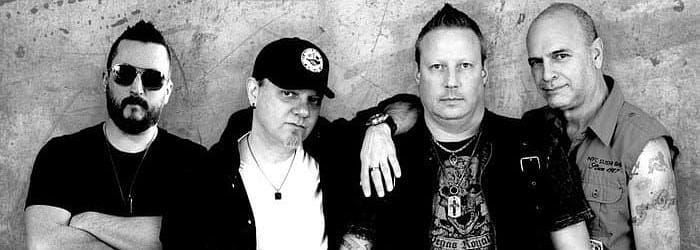
Rob Barton is vocalist for Suicide Star
Website: suicidestarmusic.com